|
For nineteen years Berkshire had enjoyed dividends flowing from its 51% stake in GEICO when it bought the remaining shares in 1996 for $2.3bn. GEICO was an exceptionally well-run primary insurer with a focus on auto policies (see earlier newsletters on GEICO). Its two key managers continued to run the business: Tony Nicely managing underwriting (until 2019) and Lou Simpson investing float (until 2010). The acquisition of GEICO immediately increased Berkshire’s total float by nearly $3bn.
In the lead up to the 1998 purchase of General Re Berkshire’s insurance operations were firing on all cylinders – see Table 1. GEICO achieved an underwriting profit in 1997 of 8.1% of premiums (underwriting profit of $281m on revenue of $3,482m), an outstanding result for the auto insurance segment. But even that was trumped by the 32.9% 1997 underwriting profit on National Indemnity’s traditional business (it had a three-year average underwriting profit of 24.3%). The homestate operation produced 14.1% profit (15.1% average over three years) and Berkshire’s workers’ compensation business turned in a three-year record of a positive 1.5%. Aggregating these operations with Central States Indemnity, and Kansas Bankers Surety, in the Berkshire Hathaway Direct Insurance Group we see an underwriting gain of $53m on a revenue of $321m. Berkshire Hathaway Reinsurance Group made a small underwriting profit, which was more than satisfactory given that it generated nearly $1bn in premiums helping to keep its float topped up to around $4bn. Table 1. Underwriting profits of Berkshire Hathaway Insurance Business (including GEICO) 1996 - 1997 (1) (2) Yearend Yield Underwriting Approximate on Long-Term Loss Average Float Cost of Funds Govt. Bonds (In $ Millions) (Ratio of 1 to 2) 1996 profit 6,702.0 less than zero 6.64% 1997 profit 7,093.1 less than zero 5.92% General Re in 1998 General Re is primarily a reinsurance company with a focus on property and casualty risks based in Stamford, Connecticut, the same town where Ajit Jain had his HQ. Indeed, Berkshire and General Re had done a lot of business together over the years. General Re was among the top three global reinsurance companies based on net premium written and capital, operating in 61 cities in 31 countries, providing coverage in over 150 countries and employing 3,869 people. It had four divisions, but almost half of its revenue came from the North American property/casualty business and a third from international property/casualty – see Table 2. Life and health insurance was a large business with $1.3bn of revenues, but in the context of the huge General Re this constituted only 15% of the total. The financial services division had $301m of revenue. North American property/casualty reinsurance Operating in the USA and Canada this division predominately wrote excess reinsurance (indemnifies the primary insurer for that proportion of the loss that exceeds an agreed amount). Casualty accounted for 57% of revenue with property another 30%. The rest was specialty (unusual coverage such as high risk behaviour like skydiving) and surplus lines (high limit and hard-to-place risks). International property/casualty reinsurance In 1994 General Re, Germany, became much more international with the acquisition of 75% of Cologne Re expanding its operations to 29 counties and providing cover in over 150. The majority of business was reinsu ………………To read more subscribe to my premium newsletter Deep Value Shares – click here http://newsletters.advfn.com/deepvalueshares/subscribe-1
0 Comments
Insurance float comes in different qualities. Insurance against hail damage to crops over a few days or weeks does not produce much float at all because premiums are paid shortly before the threat and claims are paid shortly afterwards. This means that combined ratio of 100 is of no value to the insurer because it offer no chance to produce profit from investing float. (Combined ratio is cost of operations and claims divided by premiums expressed as a percentage)
In contrast, doctors, lawyers and accountants buying malpractice insurance generate a high amount of float compared with the annual premium – lodges of claims are often long after the alleged bad behaviour, and even after that pay outs might only occur only after lengthy litigation. With this type of “long-tail” business a combined ratio of 115 or more can be profitable because the income and capital gains on the float over a number years can mount up. The snag with long-tail insurance is that outcomes are far less predictable than short-term insurance, and it might be that the combined ratio ends up at 200 or 300, a disastrous loss for most insurance companies. Clearly long-tail insurers need to be very careful in selecting the risks they accept and be diversified so that if a mistake is in made in one area they have strength in many others. Because of the different qualities of float Buffett suggests we measure insurance performance using the metric “loss/float ratio” over a period of years to gain a rough indication of the cost of funds generated by insurance operations. Examination of the table gives us some idea of Berkshire’s loss/float ratio, but only if we avoid looking at single years and instead focus on groups of years, say three or four years. Profit record of Berkshire Hathaway Insurance businesses (1) (2) Yearend Yield Underwriting Approximate on Long-Term Loss Average Float Cost of Funds Govt. Bonds ------------ ------------- --------------- ------------- (In $ Millions) (Ratio of 1 to 2) 1967 ......... profit $17.3 less than zero 5.50% 1968 ......... profit 19.9 less than zero 5.90% 1969 ......... profit 23.4 less than zero 6.79% 1970 ......... $0.37 32.4 1.14% 6.25% 1971 ......... profit 52.5 less than zero 5.81% 1972 ......... profit 69.5 less than zero 5.82% 1973 ......... profit 73.3 less than zero 7.27% 1974 ......... 7.36 79.1 9.30% 8.13% 1975 ......... 11.35 87.6 12.96% 8.03% 1976 ......... profit 102.6 less than zero 7.30% 1977 ......... profit 139.0 less than zero 7.97% 1978 ......... profit 190.4 less than zero 8.93% 1979 ......... profit 227.3 less than zero 10.08% 1980 ......... profit 237.0 less than zero 11.94% 1981 ......... profit 228.4 less than zero 13.61% 1982 21.56 220.6 9.77% 10.64% 1983 33.87 231.3 14.64% 11.84% 1984 48.06 253.2 18.98% 11.58% 1985 44.23 390.2 11.34% 9.34% 1986 55.84 797.5 7.00% 7.60% 1987 55.43 1,266.7 4.38% 8.95% 1988 11.08 1,497.7 0.74% 9.00% 1989 24.40 1,541.3 1.58% 7.97% 1990 26.65 1,637.3 1.63% 8.24% 1991 119.59 1,895.0 6.31% 7.40% 1992 108.96 2,290.4 4.76% 7.39% 1993 profit 2,624.7 less than zero 6.35% 1994 profit 3,056.6 less than zero 7.88% 1995 profit 3,607.2 less than ………………To read more subscribe to my premium newsletter Deep Value Shares – click here http://newsletters.advfn.com/deepvalueshares/subscribe-1 Berkshire Hathaway insurance business has always been run with an iron discipline approach. Warren Buffett and Charlie Munger would rather shrink the business than take on poorly priced insurance risk. Thus, in the years preceding 1985 Berkshire was the slowest-growing large US insurer. In fact, it shrank.
It wasn’t that it withdrew from the market. Indeed, it was the industry’s most steadfast provider, but it would only quote premiums that “we believe to be adequate” (1986 letter) said Buffett. There are times, such as the lead up to 1985, when other insurers slash prices to bargain levels to maintain volume. Naturally, clients leave Berkshire and go to them during these times. Then the cycle turns, as rivals run out of capital or become frightened by the losses generated by low premiums exit the market, and customers flood back to Berkshire. “Our firmness on prices works no hardship on…our employees: we don’t engage in layoffs when we experience a cyclical slowdown at one of our generally-profitable insurance operations. This no-layoff practice is in our self-interest. Employees who fear that large layoffs will accompany sizable reductions in premium volume will understandably produce scads of business through thick and thin (mostly thin).” (1986 letter) This policy produced huge swings in volume of primary insurance business. For example, monthly volume of $5m premiums in the final quarter of 1984 jumped to about $35m in the first quarter of 1986. A similar discipline, and therefore volume variability, pervaded the reinsurance business. A low cost of float, not a no cost of float The target of achieving profitability on underwriting, i.e. a combined ratio under one, is a harsh one. Most insurers are content to make small losses on underwriting which they make up for by investing the float. Even Buffett does not require a profit on underwriting, preferring the metric which compares the percentage underwriting loss on float with the rate of interest available on risk-free investments – see Table. Profit record of Berkshire Hathaway Insurance businesses 1967-1995 (1) (2) Yearend Yield Underwriting Approximate on Long-Term Loss Average Float Cost of Funds Govt. Bonds ------------ ------------- --------------- ------------- (In $ Millions) (Ratio of 1 to 2) 1967 ......... profit $17.3 less than zero 5.50% 1968 ......... profit 19.9 less than zero 5.90% 1969 ......... profit 23.4 less than zero 6.79% 1970 ......... $0.37 32.4 1.14% 6.25% 1971 ......... profit 52.5 less than zero 5.81% 1972 ......... profit 69.5 less than zero 5.82% 1973 ......... profit 73.3 less than zero 7.27% 1974 ......... 7.36 79.1 9.30% 8.13% 1975 ......... 11.35 87.6 12.96% 8.03% 1976 ......... profit 102.6 less than zero 7.30% 1977 ......... profit 139.0 less than zero 7.97% 1978 ......... profit 190.4 less than zero 8.93% 1979 ......... profit 227.3 less than zero 10.08% 1980 ......... profit 237.0 less than zero 11.94% 1981 ......... profit 228.4 less than zero 13.61% 1982 21.56 220.6 9.77% 10.64% 1983 33.87 231.3 14.64% 11.84% 1984 48.06 253.2 18.98% 11.58% 1985 44.23 390.2 11.34% 9.34% 1986 55.84 797.5 7.00% 7.60% 1987 55.43 1,266.7 4.38% 8.95% 1988 11.08 1,497.7 0.74% 9.00% 1989 24.40 1,541.3 1.58% 7.97% 1990 26.65 1,637.3 1.63% 8.24% 1991 119.59 1,895.0 6.31% 7.40% 1992 108.96 2,290.4 4.76% 7.39% 1993 profit 2,624.7 less than zero 6.35% 1994 profit 3,056.6 less than zero 7.88% 1995 profit 3,607.2 less than zero 5.95% Buffett is comparing what he calls the “cost of float” with a rough proxy of what Berkshire would obtain if it invested all float in long-term government bonds. Another way of looking at it i………………To read more subscribe to my premium newsletter Deep Value Shares – click here http://newsletters.advfn.com/deepvalueshares/subscribe-1 |
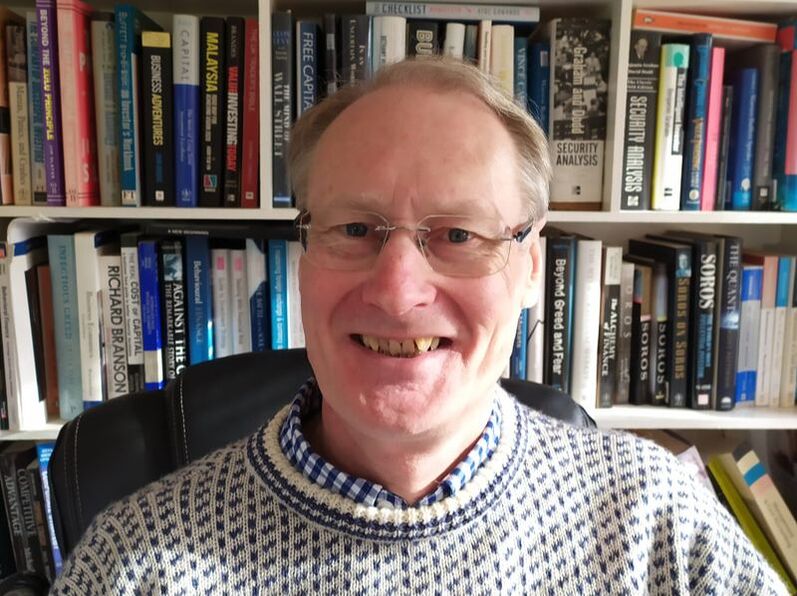
Glen ArnoldI'm a full-time investor running my portfolio. I invest other people's money into the same shares I hold under the Managed Portfolio Service at Henry Spain. Each of my client's individual accounts is invested in roughly the same proportions as my "Model Portfolio" for which we charge 1.2% + VAT per year. If you would like to join us contact Jackie.Tran@henryspain.co.uk investing is about making the right decisions, not many decisions.
Categories
All
Archives
May 2023
|
 RSS Feed